8 Best SERP Tracking Tools 2026 [Controversial]
 Luciano Viterale
 This article contains affiliate links, and if you buy through some of them I may earn a commission at no extra cost to you. Here's what that does not buy: editorial input. No brand on this page saw a word of it before it went live, no tool earns a higher score because we have a deal, and the commission does not change the ranking. My one affiliate relationship here is SE Ranking, and it happens to sit at number one on merit, which I'll explain rather than ask you to take on faith. Full affiliate disclosure if you want the detail.
On this page
Most "best SERP tracker" lists rank tools by their aggregate G2 star rating, then link whatever pays the fattest commission. That is not a review. It's a leaderboard of who spent the most on affiliate marketing.
This one is different in a boring but important way: I've personally used every tool on this list, the scores are mine and not borrowed, and the tool I rate highest costs a fraction of the ones everyone else crowns.
If a famous tool is overpriced for what it does, I say so.
Last updated July 2026: rebuilt from scratch. Cut from 15 tools to 8, replaced borrowed G2 ratings with my own scored rubric, re-verified every price against the vendor's live pricing page, and I GEO tracking, which did not exist as a category when this article first went up.
The thing nobody ranking these tools wants to admit
I check my rankings every week. I've done it for years, across my own sites, the newsletter I co-founded and sold, and client projects.
So I care about this category more than most people writing about it.
Here is what changed, and why almost every article ranking these tools is quietly out of date.
Rank tracking used to have one job: tell you where you sit in the ten blue links for a keyword. Simple. Every tool below does that.
But a growing share of the people searching your keywords never see those ten blue links anymore. They ask ChatGPT. They read the AI Overview at the top of Google and stop there. They use Perplexity. Your classic position ranking can be holding at number three while the actual answer is being handed to someone by an AI that never mentions you.
A rank tracker that only watches blue links is now measuring a shrinking surface. That single fact reshuffles this whole list, because the expensive tools everyone ranks first treat AI tracking as a costly add-on, while a couple of cheaper tools bake it in. Track that, plus price, and the "obvious" winners stop being obvious.
That is the controversial part. Let's get into it.
TL;DR: the 8 best SERP tracking tools
Ordered by the job you're hiring the tool to do, not by rank. The scores below explain the order.
- 🥇 SE Ranking (9.0): the best value, and the only pick that tracks blue links and AI answers in one plan without an upsell.
- Ahrefs (8.0): the best data and my daily driver, dinged only because rank tracking specifically is where it charges the most for the least.
- AccuRanker (7.5): the specialist. Fastest, most accurate, purpose-built for tracking, priced like it.
- Semrush (7.3): the biggest all-in-one suite, if you'll actually use the other 40 tools you're paying for.
- Nightwatch (7.0): the sleeper. AI tracking included on every tier and enormous location coverage.
- Mangools (6.8): the cleanest budget option, and where I started before the AI shift changed what I needed.
- Wincher (6.3): the simplest dedicated tracker, with a genuinely useful free WordPress plugin.
- Serpstat (6.0): a cheap all-in-one for people who want research plus tracking on a tight budget.
Two tools, SE Ranking and Nightwatch, do the 2026 job of tracking AI answers natively. Everyone else makes you pay extra or go elsewhere. Hold that thought, because it's most of why the order looks the way it does, the same logic behind my best DIY SEO software rankings.
What actually makes a good rank tracker in 2026
I scored all eight tools against the same six criteria, each out of 10, rolled up into the "Luc's Score" you'll see under each tool. Locking the rubric before scoring anything is the only way to stop yourself handing out comfort scores. Here's what each one means:
- Tracking accuracy and update frequency: does the position it reports match what a real user sees from that location, and how often does it refresh? Daily is the floor now. On-demand is the ceiling.
- Location and device granularity: can it track by city or postcode, and split mobile from desktop? A national average is close to useless for a local business.
- SERP feature and competitor tracking: does it show featured snippets, People Also Ask, local packs, and where competitors sit against you, not just your own number?
- Ease of use and reporting: can you read your position at a glance, set alerts, and hand a client a clean white-label report without a fight?
- AI-answer / LLM visibility: does it also track whether you show up in AI Overviews, ChatGPT, and Perplexity? A pure blue-link tool scores low here on purpose. That's useful information, not a punishment.
- Value for money: cost against what you actually get, judged for a solo operator or small team, not an enterprise with a blank check.
That last criterion is why a couple of famous names score lower than tools you've barely heard of. Good.
1. SE Ranking
Luc's Score: 9.0/10
Third-party ratings: G2: 4.7/5 (2,396 reviews) · Capterra: 4.7/5 (297 reviews)
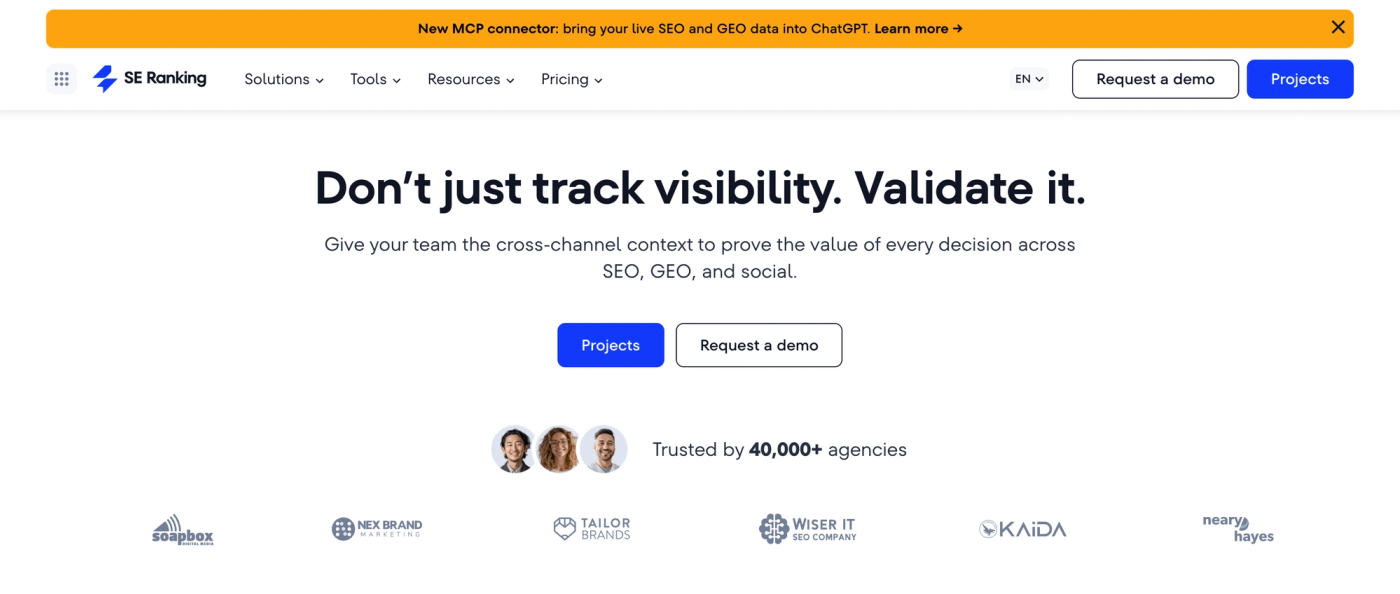
SE Ranking is the tool I'd hand to almost anyone reading this. It does keyword research, site audits, competitor analysis, and rank tracking in one place, the interface is clean, and it does the tracking part genuinely well. Not "well for the price." Well.
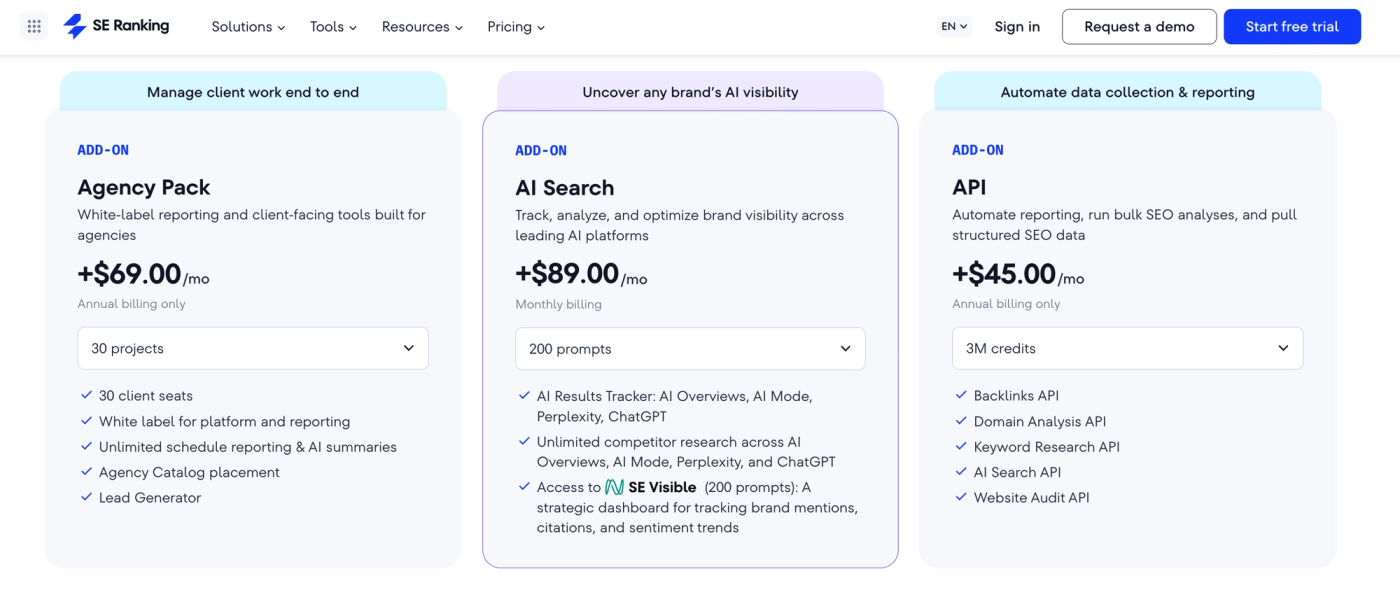
Then there's the part that moves it to number one. SE Ranking tracks how you show up in AI Overviews, Google's AI Mode, Perplexity, and ChatGPT inside the same plan that does your normal rank tracking. Your AI visibility sits right next to your keyword positions, so you can see whether the two move together. No separate product, no bolt-on invoice.
The Core plan is $129 a month and tracks 2,000 keywords daily with the AI results tracker included. Compare that to what's coming up in the Ahrefs section and you'll see why it wins.
This is my one affiliate link on the page, and I'm telling you that plainly. It also happens to be the tool I'd pick with my own money, and I've laid out exactly why in my full SE Ranking review.
Key features:
- Blue-link and AI-answer tracking (AI Overviews, AI Mode, Perplexity, ChatGPT) in one plan
- 2,000 keywords tracked daily on the entry plan
- Local and mobile tracking down to city level
- Full SEO suite: audits, keyword research, competitor analysis
- White-label reporting for clients
Pros: Best value all-in-one. Tracks AI answers without an upsell. Clean enough for a non-specialist.
Cons: Pure AI-visibility depth isn't at a dedicated tool's level. If AI search is literally all you care about, a specialist digs deeper.
Pricing: Core at $129 a month (2,000 daily keywords, AI tracking included), Growth at $279, annual billing knocks 20% off. AI included on both.
2. Ahrefs
Luc's Score: 8.0/10
Third-party ratings: G2: 4.5/5 (667 reviews) · Capterra: 4.7/5 (584 reviews)
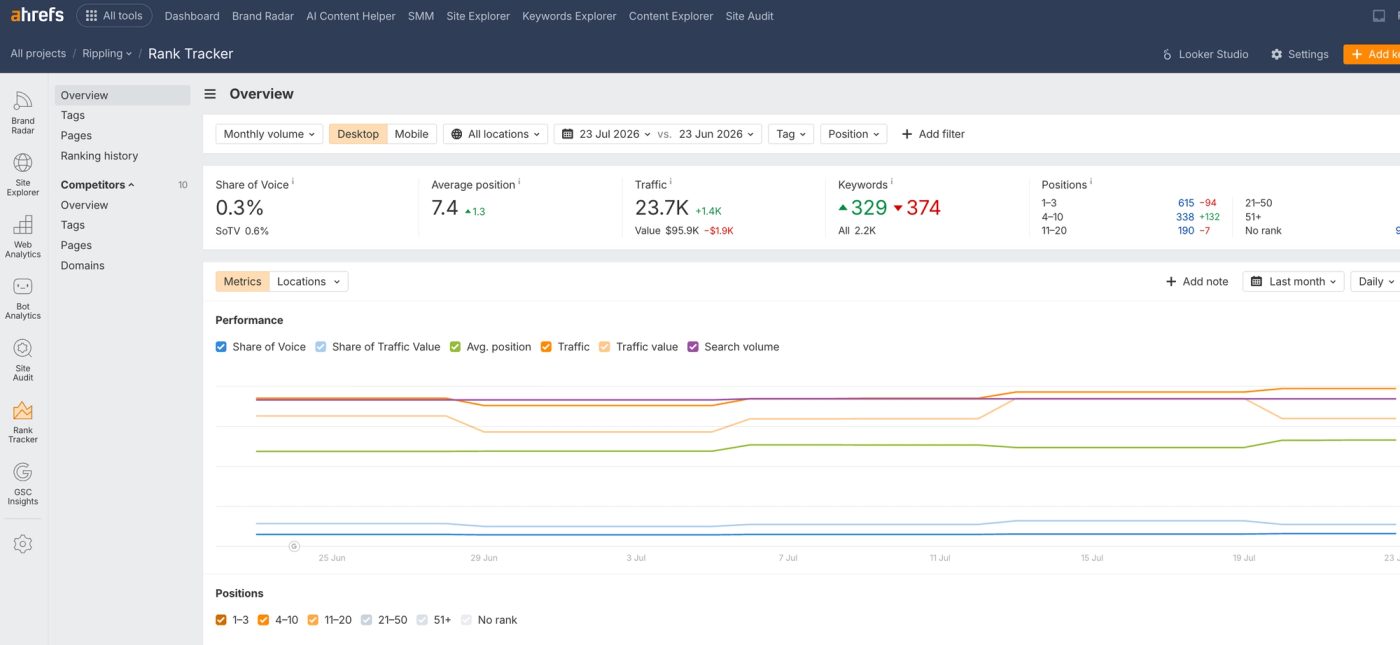
I check Ahrefs almost every day to stay on top of my sites. The data is the best in the business, the keyword-to-URL reporting is exactly what I want, and I recommend the core tool with no affiliate deal attached. So take it seriously when I tell you the rank tracking specifically is where Ahrefs charges you the most for the least.
Two honest gripes. First, on the Keyword Explorer page, when I'm poking at new keywords rather than ones I already track closely, I often have to hit refresh and wait for it to pull the latest data. On keywords I monitor daily it's fine. On exploratory work it's a small, constant friction.
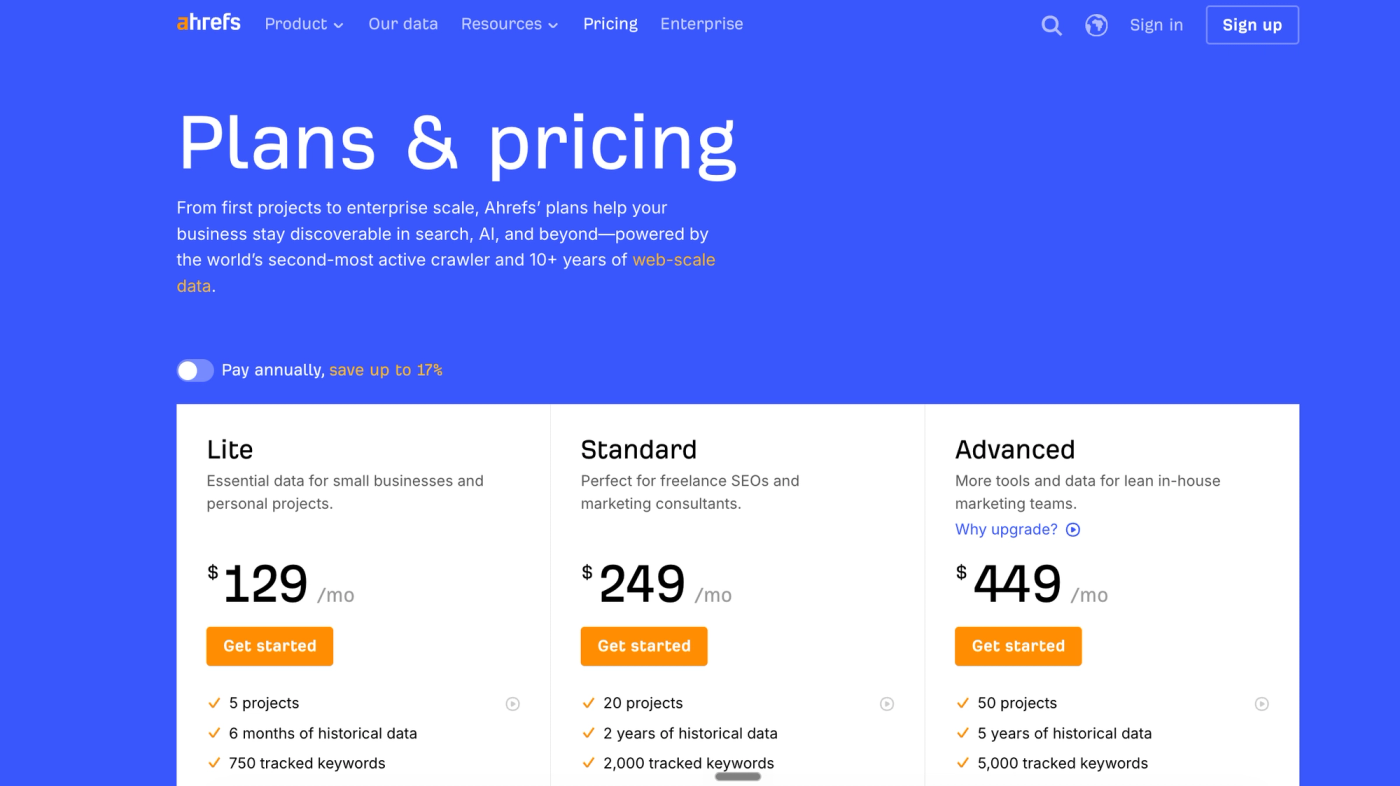
Second, the value math for tracking. The Lite plan is $129 a month and tracks 750 keywords. SE Ranking gives you 2,000 keywords and AI tracking for the same money. Ahrefs does track AI answers well, but through Brand Radar, which is an add-on from $199 a month on top of your base plan. For a solo operator, that stacks up fast.
None of that stops it being my daily driver. The data quality is worth it. It just isn't the value pick for tracking alone.
Key features:
- Best-in-class backlink and keyword database
- Traceable keyword-to-target-URL rank reporting with history
- SERP feature and competitor position tracking
- Brand Radar for AI-answer visibility (paid add-on)
- Strong technical and content tools around the tracker
Pros: The best data, full stop. Deep SERP history and context. A genuine all-round platform.
Cons: Only 750 tracked keywords at the entry price. AI tracking is a pricey separate add-on. Keyword Explorer refresh lag on new keywords.
Pricing: Lite at $129 a month (750 keywords), Standard $249, Advanced $449. Brand Radar AI add-on from $199 a month on top.
3. AccuRanker
Luc's Score: 7.5/10
Third-party ratings: G2: 4.8/5 (223 reviews) · Capterra: 4.9/5 (330 reviews)
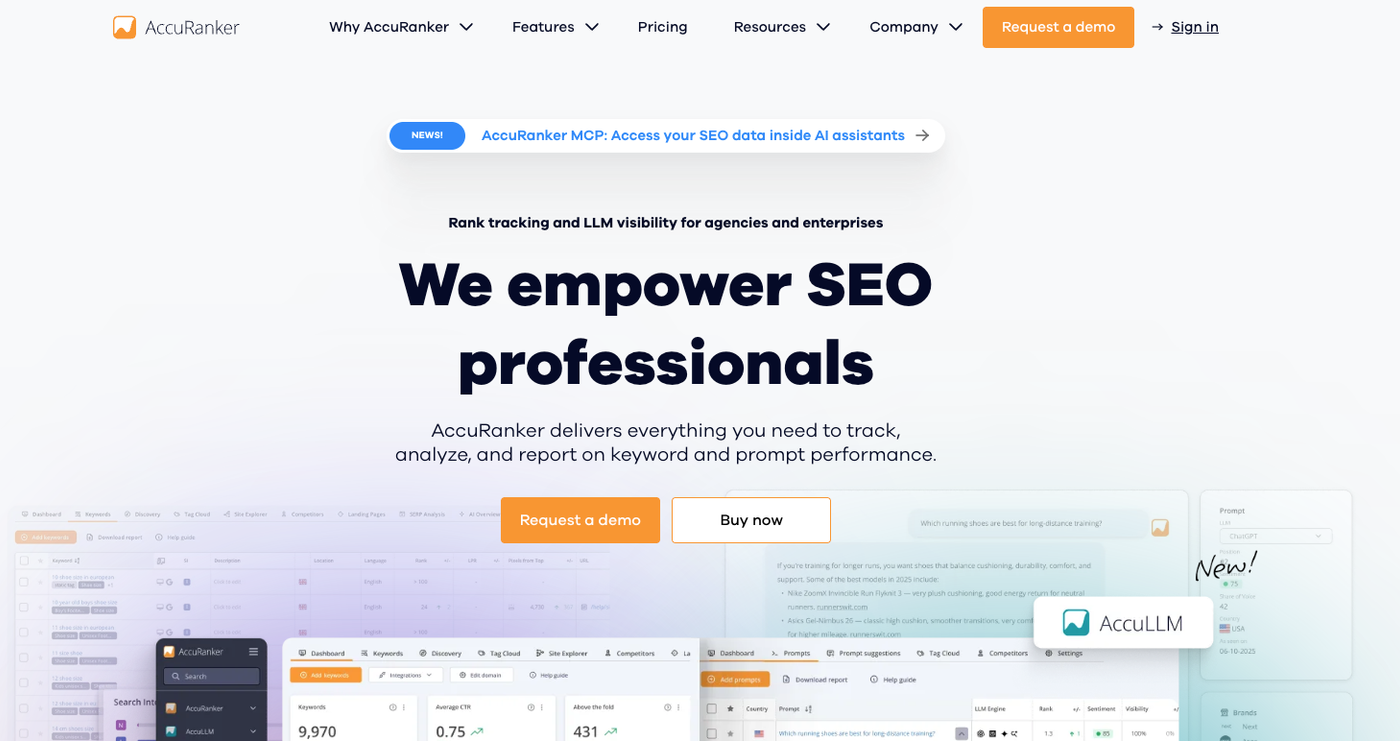
AccuRanker is obviously made for this, and that focus shows. Where Ahrefs and Semrush are giant suites with a rank tracker inside them, AccuRanker is a rank tracker that does one thing and does it better than anyone. It's widely called the fastest tracker going, and the on-demand refresh is the reason: you can pull live positions for any keyword right now instead of waiting for the next scheduled update. The UI and UX are excellent.
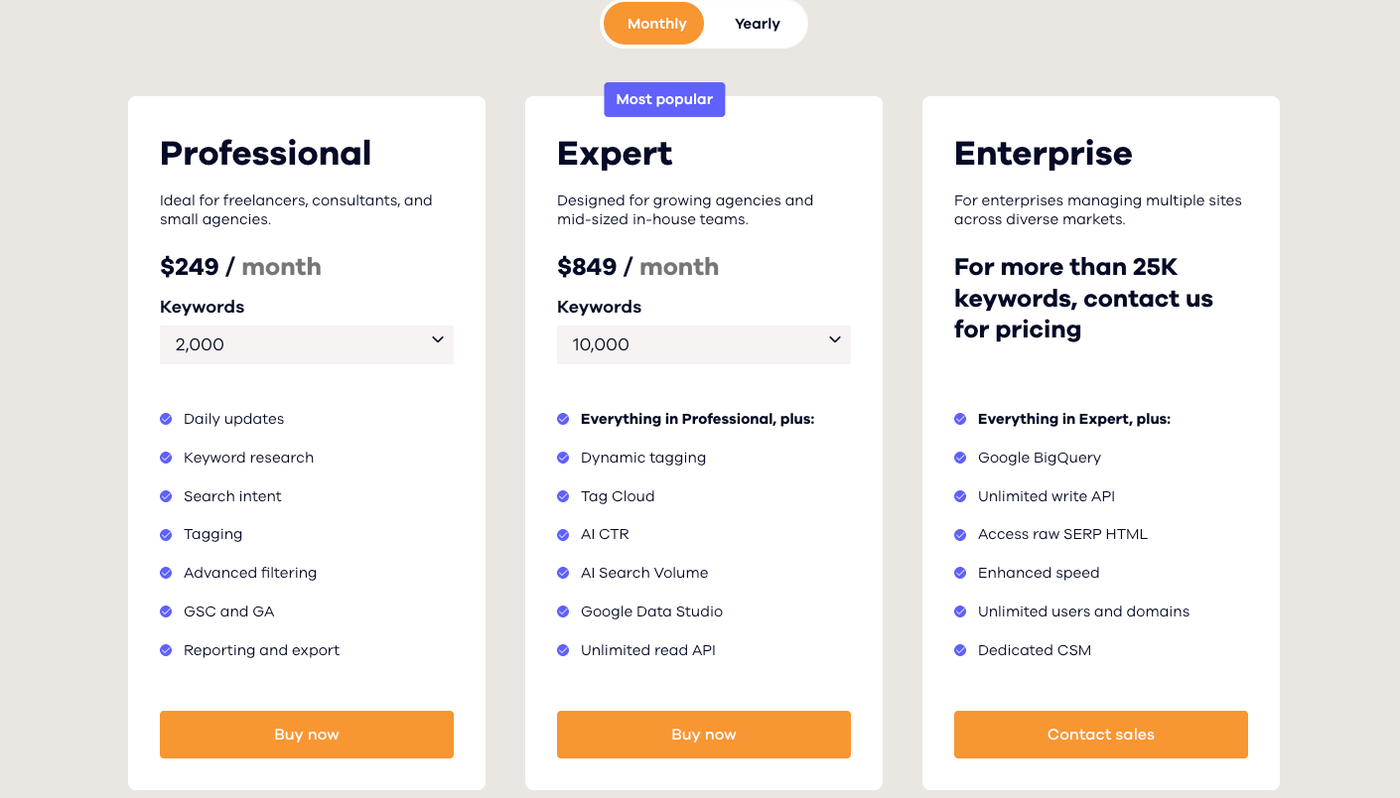
The catch is price and scope. It starts at $224 a month on the Professional plan, which is a serious step up from the all-in-one tools that also do keyword research and audits. And AI-answer tracking sits in a separate product, AccuLLM, rather than being baked into the core plan.
So this is a precision instrument. If rank tracking accuracy and speed are the whole job, nothing here beats it. If you want one tool for everything on a budget, this isn't it.
Don't just take my word on the speed. Rasmus Lindbacke, Head of Search at Saxo Bank, put it plainly in AccuRanker's customer testimonials:
"AccuRanker redefines efficiency in SEO, offering instant data that is crucial for timely and effective decision-making."
Key features:
- On-demand rank refresh (live positions on demand)
- Reputation as the fastest, most accurate tracker
- Granular SERP feature and competitor tracking
- Clean, focused interface built purely for tracking
- AI search covered via the separate AccuLLM product
Pros: Fastest and most accurate tracking on the list. Purpose-built, no bloat. Excellent UX.
Cons: Premium entry price for a single-purpose tool. AI tracking is a separate product. No research or audit suite around it.
Pricing: Professional from $224 a month (2,000 to 5,000 keywords), Expert $764, 10% off annual.
4. Semrush
Luc's Score: 7.3/10
Third-party ratings: G2: 4.5/5 (3,300+ reviews) · Capterra: 4.6/5 (2,300+ reviews)
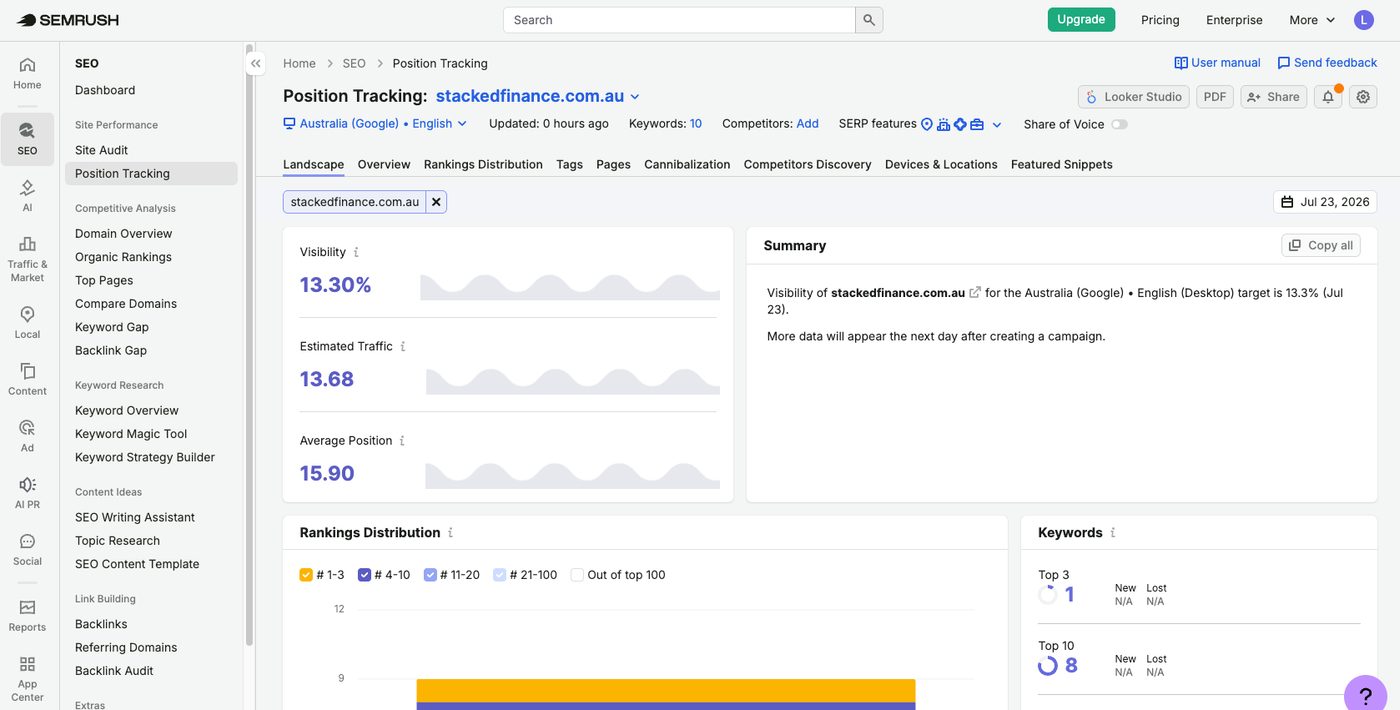
I've used Semrush a lot over the years and I like it. Its Position Tracking is solid, the competitor data is deep, and it sits inside one of the biggest SEO suites on the market.
My honest issue is one you should weigh before paying for it: there is so much in Semrush that I never get through all of it. I use Ahrefs more heavily simply because Semrush spreads across so many products that I only ever touch a slice of what I'm paying for. If you'll genuinely use the full suite, that breadth is a strength. If you just want to track rankings, you're funding a lot of features you'll never open.
One nice, lesser-known perk: sign up and you can sometimes get your business featured in Semrush's own programmatic roundup pages, which is a small backlink and visibility bonus you don't get elsewhere.
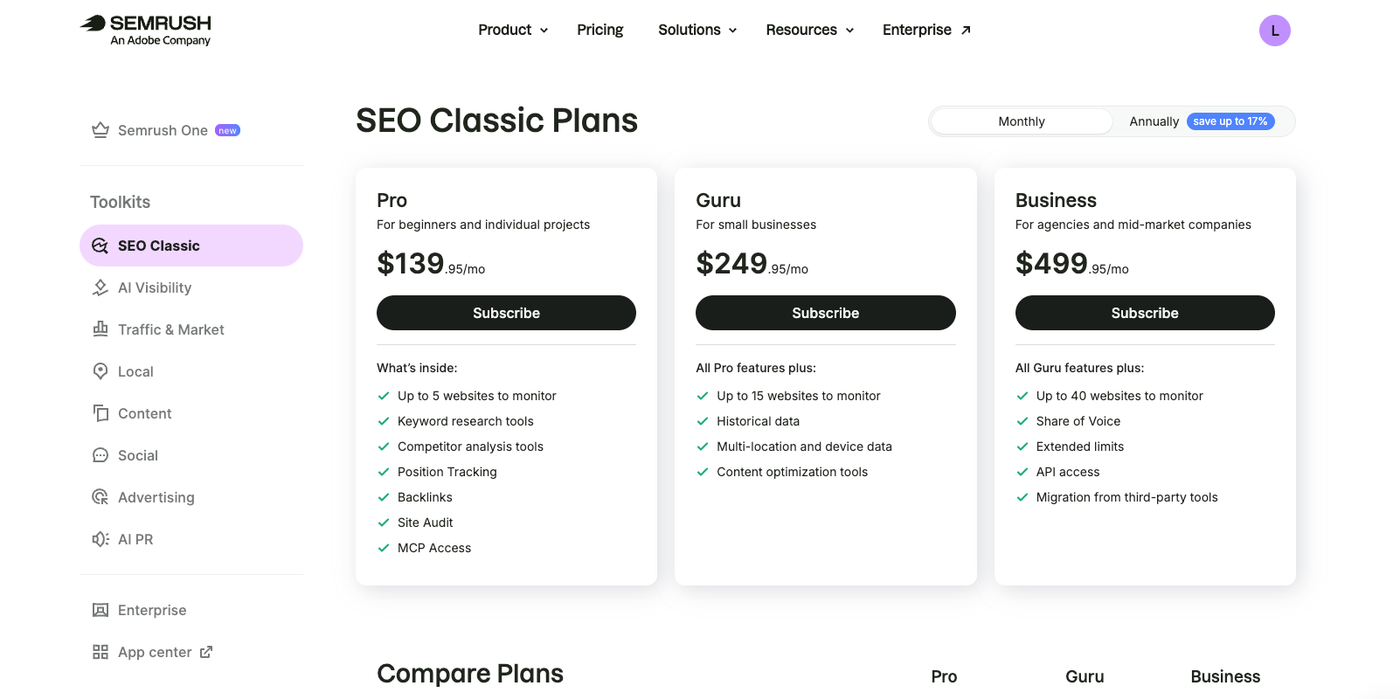
Pricing starts at $139 a month on the new SEO plan, which tracks 500 keywords daily. AI features live in a separate add-on toolkit.
Key features:
- Position Tracking with daily updates and competitor comparison
- Enormous keyword and competitive research database
- Full suite: audits, content, PPC, social, and more
- SERP feature tracking
- AI features via a separate toolkit add-on
Pros: Deep data and one of the widest toolsets available. Strong for agencies using the whole platform.
Cons: You pay for far more than tracking. Entry plan tracks only 500 keywords daily. AI is an add-on.
Pricing: SEO plan $139 a month (500 daily keywords), Starter $199, Pro+ $299, Advanced $549.
5. Nightwatch
Luc's Score: 7.0/10
Third-party ratings: G2: 4.7/5 (95+ reviews) · Capterra: 4.8/5 (review count to confirm live at publish)
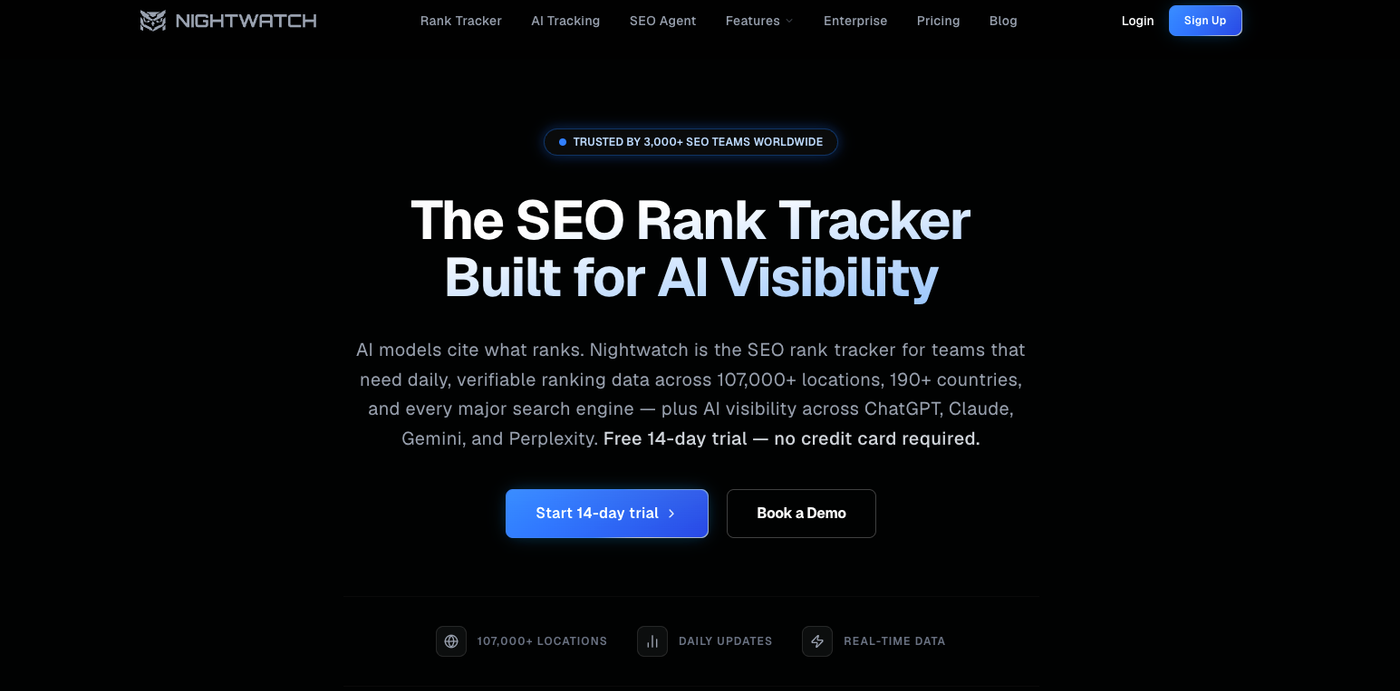
Nightwatch is the one on this list I've spent the least hands-on time in, so I'm scoring it partly on its documentation, feature set, and reputation rather than daily use. I'm flagging that honestly. But it earns its spot because of what it includes at the price.
Two things stand out. It bundles AI search visibility tracking on every plan, not as an upsell, which puts it in the small club of tools doing the 2026 job by default. And it tracks across an enormous number of locations, which matters a lot if you do local or multi-market SEO.
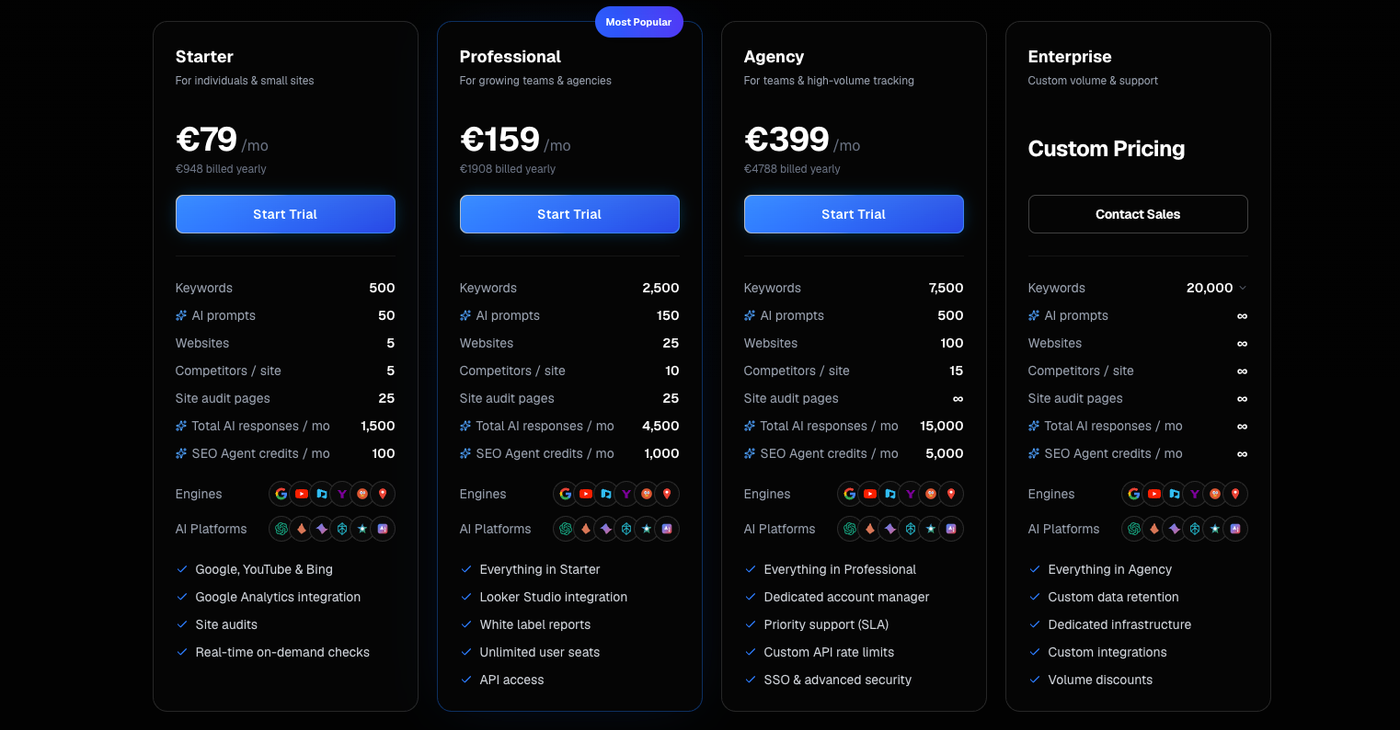
It starts at €79 a month for 500 keywords, priced in euros. That's more than the budget tools, but you're getting AI tracking and serious location depth for it, which reframes the value.
Key features:
- AI search visibility tracking included on every tier
- Location tracking across 107,000+ locations
- Daily rank updates and white-label reporting
- SERP feature tracking
- Clean, tracking-focused dashboard
Pros: AI tracking bundled at every tier. Exceptional location coverage. Fair value for what's included.
Cons: Priced in euros, entry sits above the budget picks. Smaller ecosystem and research toolset than the big suites.
Pricing: Starter €79 a month (500 keywords), Professional €159 (2,500), Agency €399.
6. Mangools (SERPWatcher)
Luc's Score: 6.8/10
Third-party ratings: G2: 4.7/5 (95 reviews) · Capterra: 4.9/5 (148 reviews)
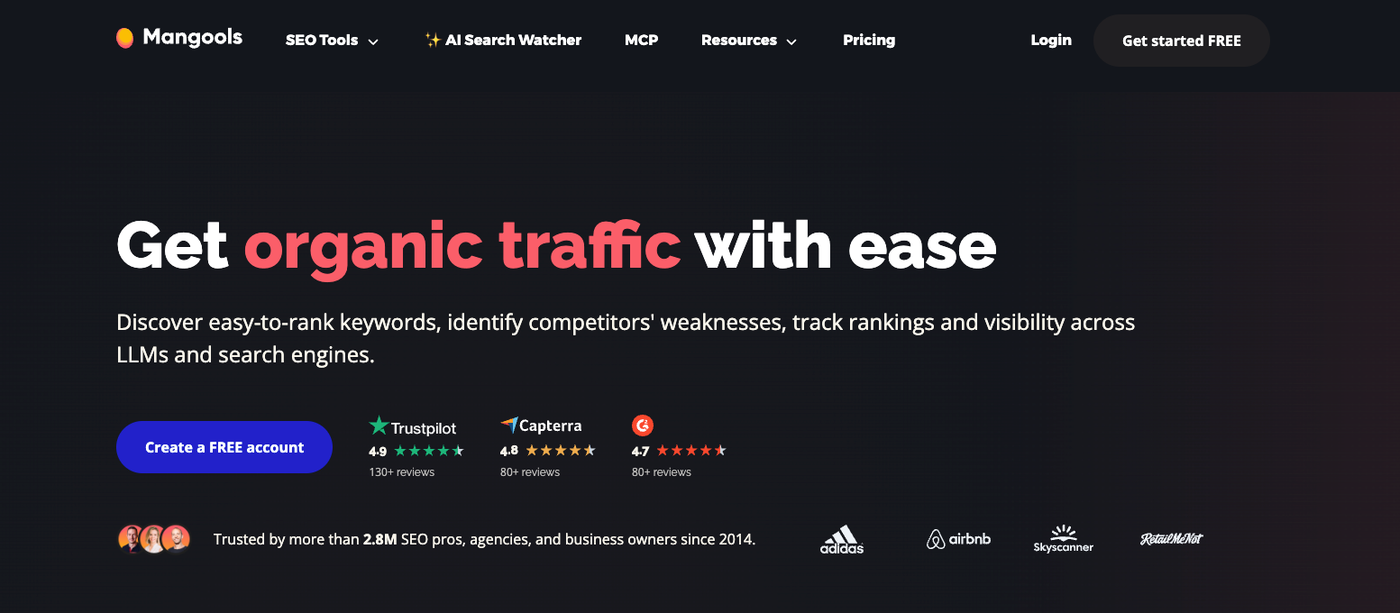
Mangools is a lightweight tool I used for a very long time, mostly because it didn't cost much and it basically offered what I needed. When I had a smaller site and was just tracking rankings across a handful of things, it was genuinely all I required.
My favorite feature is still the SERPWatcher "performance index." Instead of reading every keyword one by one, you glance at the index to see whether your site is rising or falling overall. It's a fast, honest signal, and I've relied on it for a long time.
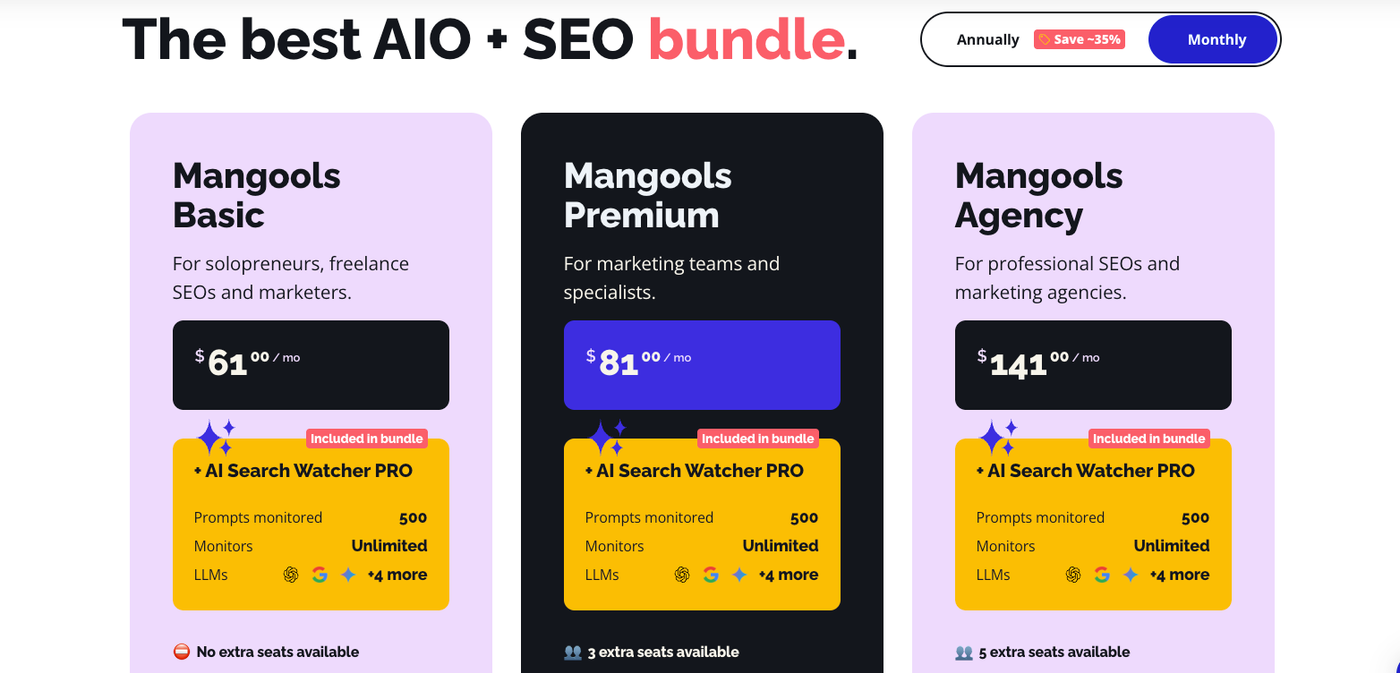
The reason it isn't higher: the AI shift changed what I need from a tracker, and Mangools is still built for the blue-link world. As a clean, cheap way to watch classic rankings, it's excellent. As a 2026-ready tracker, it's behind. And at Entry for $29 a month it's the cheapest genuinely good option here, with a free tier to try it.
Key features:
- SERPWatcher rank tracking with the performance index
- KWFinder keyword research included
- Daily updates across 65,000+ locations
- Genuinely clean, beginner-friendly interface
- Free plan plus low-cost paid tiers
Pros: The cleanest, friendliest UI on the list. Cheapest good option. The performance index is a great at-a-glance signal.
Cons: Built for blue-link tracking, thin on AI-answer coverage. Lighter on advanced SERP and competitor depth.
Pricing: Free plan, Entry $29 a month, Basic $49, Premium $69. Annual billing cuts 30 to 40%.
7. Wincher
Luc's Score: 6.3/10
Third-party ratings: G2: 4.8/5 (review count to confirm live at publish) · Capterra: 4.8/5 (93 reviews)
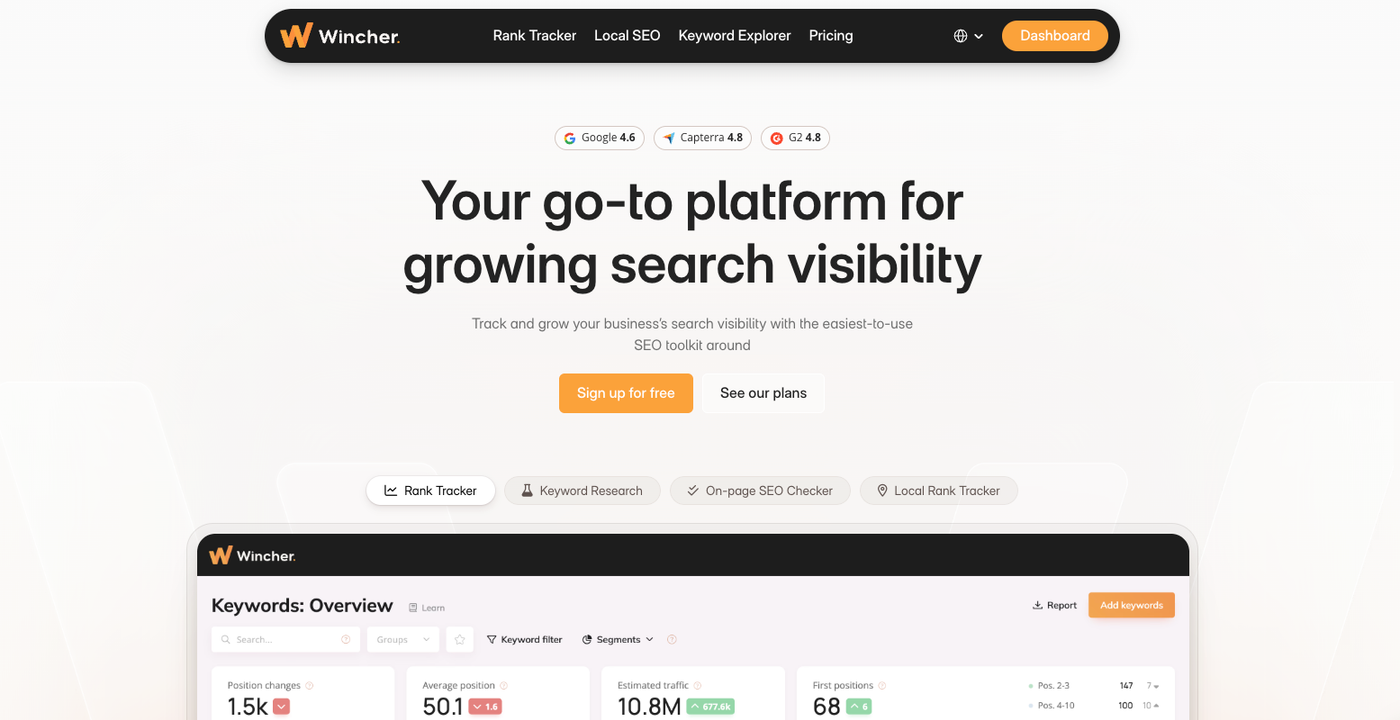
Wincher is a dedicated rank tracker that keeps things simple, and there's a real audience for that. No sprawling suite, no forty tabs you'll never open. You track keywords, you see positions, you get daily updates and local tracking. Done.
Its most useful trick is the free WordPress plugin, which lets you track up to 10 keywords for nothing right inside your dashboard. For a blogger or a small site owner who just wants to watch their main terms without paying for anything, that's a legitimately good starting point.
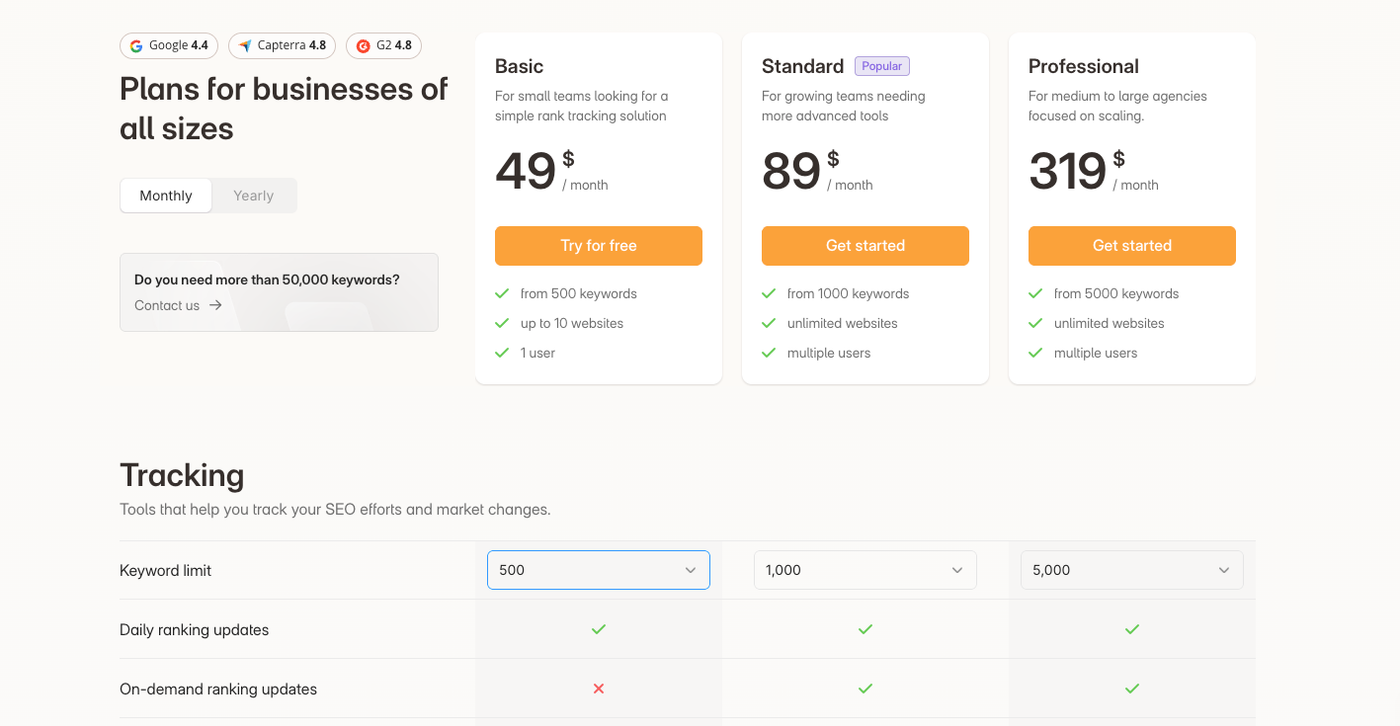
Paid plans start at €49 a month for the Basic tier. It's a clean, no-nonsense tool. It just doesn't do much on the AI-answer front, and it lacks the depth of the bigger platforms, which is why it sits down here rather than higher.
Key features:
- Free WordPress plugin tracking up to 10 keywords
- Daily rank updates and local rank tracking
- Simple, focused interface
- Keyword research and on-page tools included
- Unlimited sites on paid tiers
Pros: Dead simple. The free WordPress tracker is genuinely handy. Clean reporting.
Cons: Light on AI-answer tracking. Less depth than the bigger platforms. Priced in euros with no true free tier beyond the plugin.
Pricing: Free 10-keyword WordPress plugin, Basic €49 a month (around 500 keywords), Professional €89, Enterprise €319.
8. Serpstat
Luc's Score: 6.0/10
Third-party ratings: G2: 4.6/5 (462 reviews) · Capterra: 4.7/5 (169 reviews)
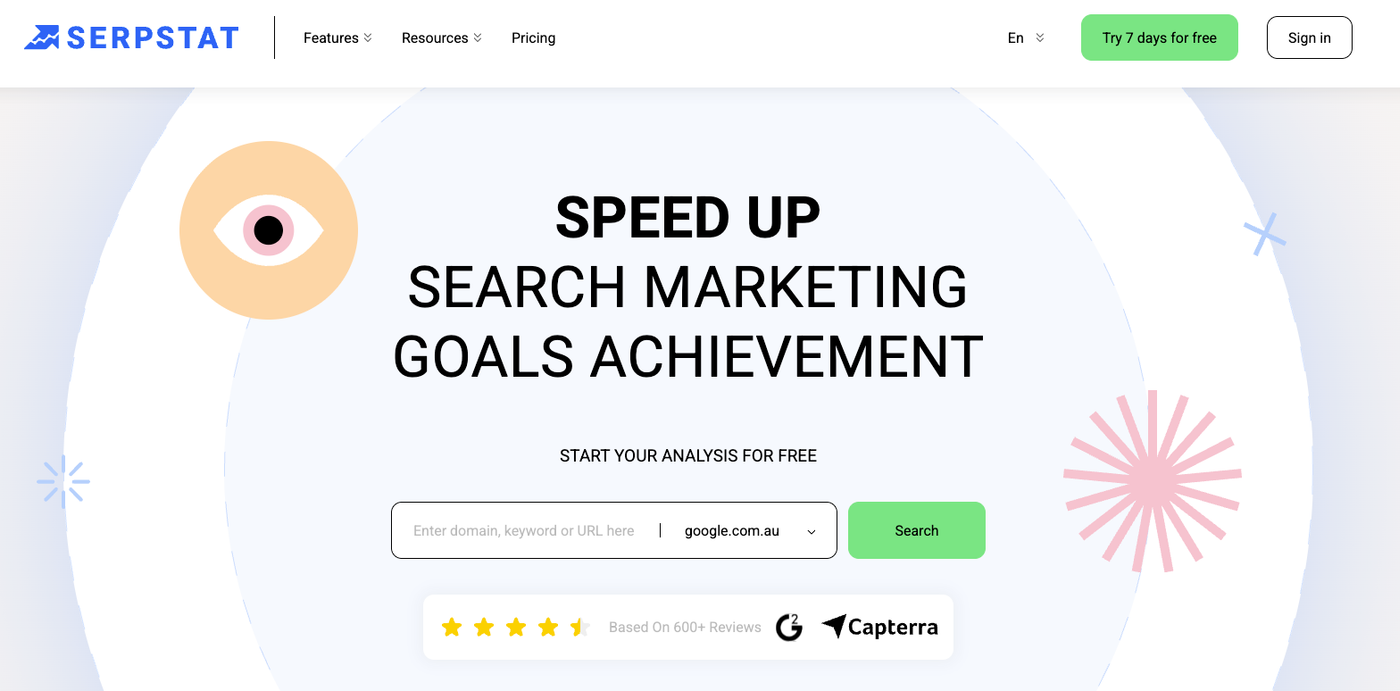
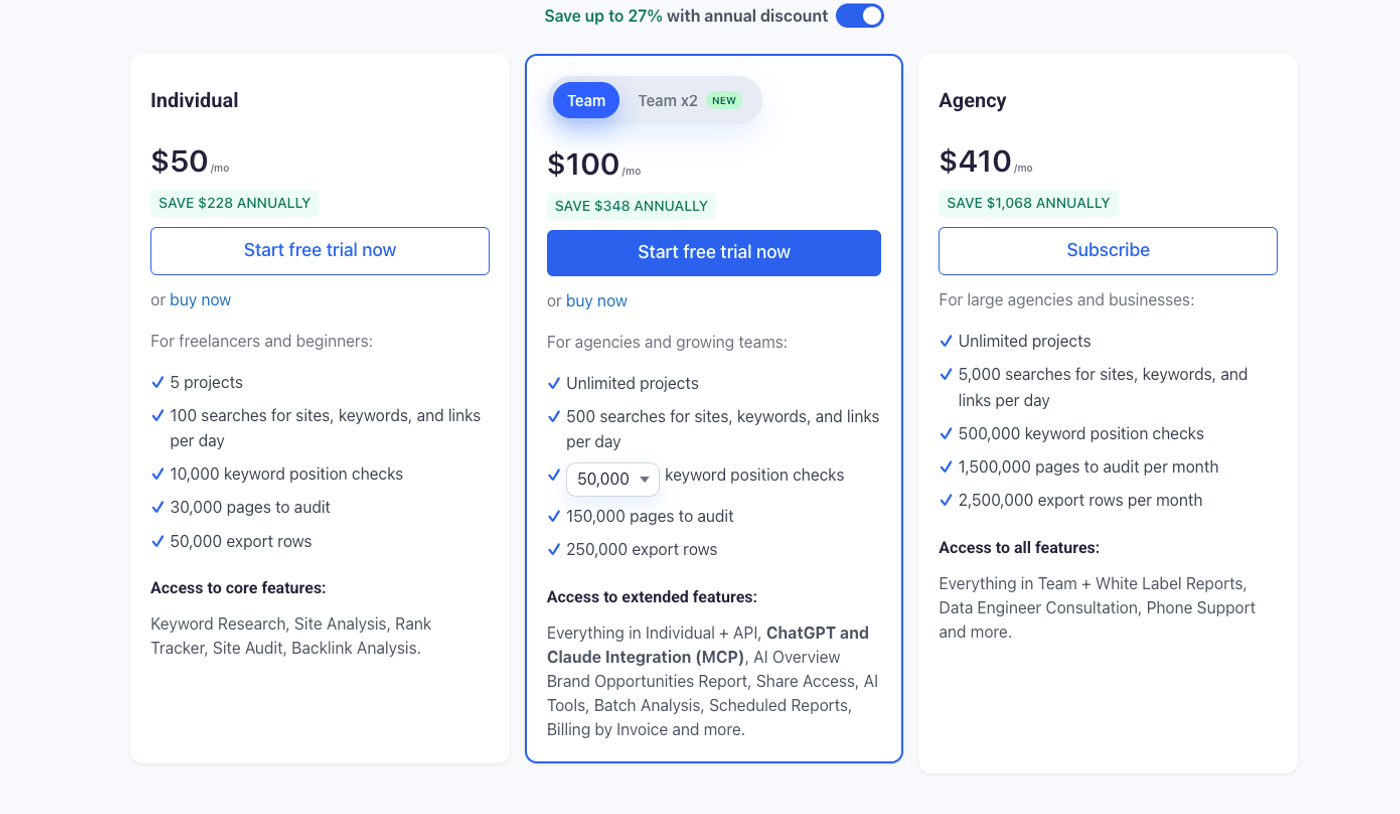
Serpstat is a budget all-in-one: rank tracking, keyword research, site audits, backlink analysis, and competitor research bundled cheaply. If you want a bit of everything and you're watching costs, it's a reasonable one-stop option, and the Individual plan at $50 a month with 10,000 monthly position checks is fair value on paper.
I've used it, and the honest read is that it does a lot of things adequately rather than any one thing brilliantly. The interface is clunkier than SE Ranking or Mangools, and it's lighter on AI-answer tracking than the tools built for 2026. It's here because it's a genuine, affordable option, not because it beats the tools above it at tracking.
Key features:
- Rank tracking with daily updates
- Keyword research, site audit, backlink and competitor analysis
- Competitor rankings side by side
- 10,000 position checks a month on the entry plan
- Cheap entry into an all-in-one toolset
Pros: Cheap all-in-one. Solid feature breadth for the money. Good for research plus tracking on a budget.
Cons: Jack of all trades, master of none. Clunkier interface. Light on AI-answer tracking.
Pricing: Individual $50 a month (10,000 checks), Team $100, Team x2 $169, Agency $410. Up to 27% off annual.
LLM tracking: the new job your rank tracker probably isn't doing
Everything above tracks blue links. This is the part most 2022-era lists skip entirely, and it's a different job, so it deserves its own moment.
Traditional rank tracking asks: where do I sit, position 1 to 100, for this keyword? LLM tracking asks a different question: when someone asks ChatGPT, Perplexity, or Google's AI a question in my space, does the answer mention me, cite me, or link me? There's no clean "position 3" here. It's share of voice and citations across engines, not a numbered rank.
That's why you can't just point your existing tracker at it and expect a number. It's a separate discipline, sometimes called GEO (generative engine optimization), and it has its own tools:
- Profound: the most serious dedicated AI-visibility tool, priced for brands and teams.
- Otterly.ai: the cheapest genuine way in, good for a solo operator who just wants to see where they stand.
- Peec AI: a clean dedicated tracker that watches your brand across the major AI engines.
I go deep on all of these, with scores and pricing, in my guide to the best AI SEO tools.
Here's the practical shortcut, and the reason it shaped this whole ranking: two tools on this list, SE Ranking and Nightwatch, already track AI answers alongside your normal rankings, in one plan. For most people that's enough to start. You don't need a separate GEO tool on day one. You need to stop being blind to it. And if you want the manual method for actually getting cited in AI answers, here's exactly how to rank in AI search.
Pricing snapshot
| Tool | Free option | Starting price | One-line note |
|---|---|---|---|
| SE Ranking | 14-day trial | $129/mo | AI tracking included, best value all-in-one |
| Ahrefs | Free Webmaster Tools | $129/mo (750 kw) | Best data, AI is a $199+ add-on |
| AccuRanker | Trial | $224/mo | Fastest and most accurate, AI is separate |
| Semrush | Limited free | $139/mo (500 kw) | Huge suite, tracks 500 kw daily on entry |
| Nightwatch | Trial | €79/mo | AI tracking included every tier |
| Mangools | Free plan | $29/mo | Cheapest good option, blue-link focused |
| Wincher | Free WP plugin (10 kw) | €49/mo | Simple dedicated tracker |
| Serpstat | Trial | $50/mo | Cheap all-in-one, jack of all trades |
Prices verified against each vendor's pricing page in July 2026.
How to combine: pick one tracker, add AI only if you need it
You don't need all eight. For rank tracking, most people buy one tool. The only question is whether you add a second layer for AI answers, and usually you don't have to, because the right primary tool covers both.
Match yourself to one of these:
- You want one tool that does everything, at a fair price: SE Ranking. Blue links and AI answers in one plan at $129 a month. This is the default answer for most readers, and it's not close.
- You want the best data and you'll pay for it: Ahrefs as your platform. Add Brand Radar only if AI visibility becomes a real priority and the budget's there.
- You're a tracking purist or an agency living in rank data: AccuRanker for speed and accuracy, and accept that AI tracking is a separate spend.
- You're on a tight budget and mostly care about blue links: Mangools at $29, or Wincher's free WordPress plugin to start. Add an AI-answer tool later.
- You do heavy local or multi-market work and want AI included: Nightwatch, for the location depth and bundled AI tracking.
The one setup I'd push back on: paying enterprise prices for a blue-link-only tracker in 2026 and staying blind to AI answers. That's the 2022 setup, and the search results moved on.
How I scored these tools
Every tool was scored against the same six criteria from the rubric above, each out of 10, then rolled up into the Luc's Score. Here's the full breakdown so you can see exactly where each one earns or loses:
| Tool | Accuracy | Location | SERP/Comp | Ease | AI answers | Value | Luc's Score |
|---|---|---|---|---|---|---|---|
| SE Ranking | 9 | 9 | 9 | 9 | 9 | 9 | 9.0 |
| Ahrefs | 9 | 8 | 9 | 8 | 7 | 7 | 8.0 |
| AccuRanker | 10 | 9 | 8 | 9 | 5 | 4 | 7.5 |
| Semrush | 8 | 8 | 9 | 7 | 6 | 6 | 7.3 |
| Nightwatch | 7 | 9 | 6 | 7 | 8 | 5 | 7.0 |
| Mangools | 8 | 7 | 6 | 9 | 3 | 8 | 6.8 |
| Wincher | 8 | 7 | 5 | 8 | 3 | 7 | 6.3 |
| Serpstat | 7 | 6 | 7 | 6 | 4 | 6 | 6.0 |
Under each tool you'll also see its live G2 and Capterra ratings. Those are there as a reality check, not as the ranking. The crowd and I don't always line up: AccuRanker outscores SE Ranking on both platforms, yet SE Ranking sits above it here, because those star averages don't weigh price or AI tracking the way I do. I pulled the G2 and Capterra figures in July 2026, and each links to the live listing so you can see the current count, which moves daily.
The scores are mine, from hands-on use of every tool on the list, not aggregated star ratings. Where my hands-on time is lighter, I've said so in the tool's section rather than pretend otherwise: I use Ahrefs daily, SE Ranking, Mangools, and AccuRanker I've used directly, Semrush I've used a lot but not across its full suite, and Nightwatch I'm scoring more from its feature set and reputation than daily use.
On credibility: I've run SEO on my own sites and for clients for years, co-founded a newsletter business we sold to a fintech company, and I currently work in growth at Rippling. I track rankings weekly, which is the whole reason I have opinions this specific.
Scores weigh value for a solo operator or small team against raw capability. That's why AccuRanker, a superb tool, scores where it does: the tracking is the best here, but $224 a month for one job, with AI tracking sold separately, is a lot for most people reading this. A lower score is a comment on value, not on whether the tool is good.
FAQ
What's the best SERP tracking tool overall?
SE Ranking, for most people. It tracks blue links and AI answers in one plan at $129 a month, the interface is clean, and it does the core job as well as tools that cost more. Ahrefs has better data if you'll pay for it. AccuRanker is faster and more accurate if tracking is all you need and budget isn't the constraint.
Why isn't Ahrefs or Semrush number one?
Because this list scores value, and for rank tracking specifically they charge the most for the least. Ahrefs tracks 750 keywords at $129 and sells AI tracking as a $199-plus add-on. SE Ranking tracks 2,000 keywords with AI included at the same price. As full platforms they're excellent. As pure trackers, they're not the value pick.
Do I really need a tool that tracks AI answers?
Increasingly, yes, depending on your niche. More searchers are getting their answer from an AI Overview or ChatGPT without ever clicking a blue link. If that's happening in your space, a blue-link-only tracker is measuring a shrinking slice of reality. The easy move is to pick a tool that does both, like SE Ranking or Nightwatch, so you're not blind to it.
What's the cheapest good rank tracker?
Mangools at $29 a month, with a free plan to try it, if you mainly care about blue-link tracking. Wincher's free WordPress plugin (10 keywords) is a solid no-cost starting point for a blogger.
How often should rankings update?
Daily is the standard now. Weekly tells you where you were, not where you are. AccuRanker goes further with on-demand refresh, letting you pull live positions the moment you need them.
Every tool I cut from the previous version, and why
The old version of this article ranked 15 tools. That was bloat. Here's what I removed and the honest reason for each:
- SERPWatch: thin, and nothing it does is done better than the eight that made the cut.
- Serpple: minor tool I tried once years ago and never returned to.
- SEORadar: enterprise change-monitoring priced for agencies, not really a rank tracker for this audience.
- Rank Tracker (SEO PowerSuite): a desktop app on a one-off license, a different model from the cloud trackers here.
- Pro Rank Tracker: dated, and outclassed by the current lineup.
- SEO Monitor: agency-only pricing and a narrow fit.
- ContentKing: acquired by Conductor and repositioned as website change monitoring, not rank tracking. It's a good tool (I once got a title-tag change alert from it within minutes), just no longer in this category.
- Moz: the tracker's fine, but the wider suite is aging and I cut it to keep the list tight. Say the word if you want it back in.
- Plus a handful of filler that only existed to pad the number to 15.
Related articles
Keep reading